AI and the Insurance Industry: The Professionals Training Their Replacements
As AI technology advances, insurance professionals are finding themselves in a paradoxical position—training the very systems that threaten their jobs. This article explores the implications of this trend for the insurance workforce and the industry at large.
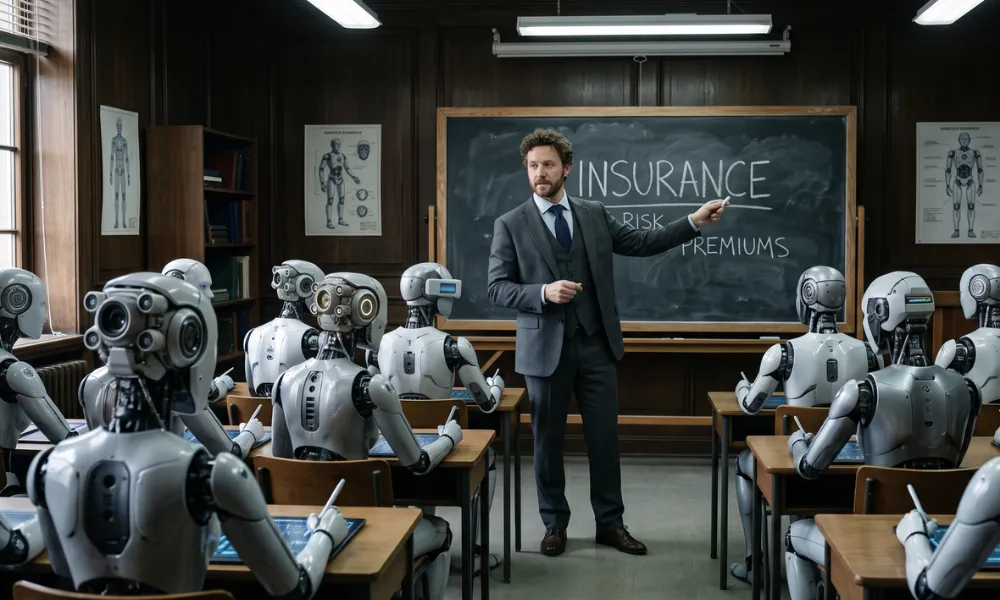
In an era where technology rapidly transforms industries, the insurance sector finds itself at a crossroads. Professionals such as underwriters, adjusters, and actuaries are now engaged in a peculiar task: training artificial intelligence (AI) systems that could ultimately render their roles obsolete. Companies like Mercor, a burgeoning AI training-data startup based in Silicon Valley, are enticing these seasoned experts to lend their knowledge in exchange for payment. However, in doing so, they may be hastening their own professional demise and that of their colleagues.
This trend raises urgent questions about job security and the future landscape of the insurance industry. As AI continues to evolve and take on increasingly complex tasks, the potential for job displacement grows. By examining how this phenomenon unfolds, we can better understand the implications for both individual careers and the broader insurance workforce.
The Unsettling Reality of AI Training in Insurance
At the core of this issue is the practice where experienced insurance professionals are contracted to assist AI labs in refining their systems. These individuals are tasked with constructing realistic scenarios based on real insurance workflows such as policy evaluations, claims processing, and underwriting submissions. In essence, they are providing AI with the very expertise that defines their careers. As these systems become more adept at handling these tasks, the demand for human expertise diminishes.
Mercor exemplifies this trend, advertising for roles like "Insurance Expert" to help train AI models to handle risk assessment and claims processing. With reports indicating that Mercor pays around $4 million a day to a workforce of approximately 30,000 contractors, the stakes are high. Such a rapid influx of cash into the AI training market reflects increasing corporate interest in automating traditionally human-driven processes.

The Economic Implications of AI Training
As AI systems become capable of replicating the judgment and analytical skills of seasoned professionals, the economic landscape of the insurance industry shifts dramatically. Experts like Danielle Li from MIT Sloan articulate that the value of expert judgment is eroded when AI can replicate it. Once a model learns to mimic the reasoning of an experienced adjuster, the uniqueness and scarcity of that expertise is lost.
This shift raises critical concerns about job security for current professionals. A recent study highlighted that job openings in the insurance sector had fallen to their lowest level in a decade, indicating a troubling trend for entry-level positions. As AI takes over administrative tasks traditionally handled by humans, the pathway for new talent entering the industry is narrowing.
Job Market Trends in the Insurance Sector
- Insurance job openings fell to their lowest level in a decade by December 2025.
- Entry-level roles that often train future underwriters and adjusters are disappearing.
- Demand for judgment-heavy positions is increasing as the talent pipeline thins.
The Ethics of Training AI
The ethics surrounding this practice are also worth examining. Many professionals entering into contracts with AI companies may not fully grasp the long-term implications of their involvement. While they may receive immediate financial compensation—often a few hundred dollars per task—they are contributing to a system that could ultimately marginalize their own profession.
Moreover, the legal ramifications can be complex. Reports have surfaced of companies requesting professional insights based on past work that may still be bound by non-disclosure agreements (NDAs). Professionals must navigate these waters carefully to avoid unintentional breaches of confidentiality.

Short-Term Gains vs. Long-Term Risks
Individuals who take on training contracts often find themselves weighing short-term financial benefits against the potential long-term consequences. While some may justify their actions by claiming they are simply supplementing their income, the reality is more nuanced. The skills they share with AI systems may not only reduce the demand for their own roles but also contribute to a trend where fewer opportunities exist for future generations of insurance professionals.
Experts caution that the allure of quick cash can blind professionals to the broader implications of their choices. As they provide their expertise to AI systems, they may inadvertently be accelerating their own obsolescence.

What Can Insurance Professionals Do?
For professionals currently navigating this landscape, it is vital to approach these opportunities with caution. Here are some strategies to consider:
- Assess Your Contributions: Consider how much of your unique judgment and expertise you are willing to share with AI models. Insist on being compensated fairly for contributions that could have long-lasting effects.
- Stay Informed: Keep abreast of industry trends and developments in AI technology. Understanding how these tools are evolving can help you anticipate their impact on your career.
- Network and Advocate: Engage with industry peers and advocate for the value of human expertise. Building a robust professional network can provide support and resources as the industry adapts to new technologies.
Key Takeaways
- Insurance professionals are training AI systems that may replace them.
- The rapid rise of AI in insurance poses serious job security risks.
- Ethical considerations and legal implications must be understood when engaging with AI.
- Strategies exist for professionals to safeguard their careers in an AI-driven landscape.
- Short-term financial gains from AI training contracts may lead to long-term consequences.
Frequently Asked Questions
What roles in the insurance industry are most at risk from AI?
Positions that involve repetitive, language-heavy tasks, such as underwriting and claims processing, are particularly vulnerable to AI implementation. As AI models improve, they can automate these functions, leading to decreased demand for entry-level roles that traditionally serve as a training ground for future professionals. This trend can ultimately threaten the entire talent pipeline within the industry.
How can professionals protect their jobs in an AI-dominated environment?
Insurance professionals can mitigate risks by staying informed about AI developments and advocating for the value of human judgment. They should also carefully assess the impact of their contributions to AI training and negotiate fair compensation for their expertise. Networking with peers can also provide support and create opportunities in an evolving job market.
Are there legal concerns professionals should be aware of when training AI?
Yes, professionals must be cautious about sharing proprietary information or insights that may be covered by non-disclosure agreements (NDAs). Engaging with AI companies should be approached with an understanding of the potential legal implications, ensuring that they do not inadvertently breach confidentiality agreements.
Is the demand for human expertise expected to decline permanently?
While AI is likely to continue evolving and automating certain tasks, there will always be a need for human judgment, especially in complex decision-making scenarios that require nuanced understanding. However, the nature of that demand may shift, necessitating professionals to adapt and reskill to remain relevant in the industry.
Comments
Coalition Launches Enhanced Cyber Insurance for Large Enterprises
In response to growing digital threats, Coalition introduces Active Cyber Insurance for Enterprises, offering up to $25 million in coverage for large U.S. businesses. This innovative solution comes on the heels of a strategic partnership with Allianz, aiming to bolster cyber resilience in an increasingly complex threat landscape.

Related articles






Popular in Business Insurance
- Surging War-Risk Insurance Rates in the Strait of Hormuz: What It Means for Shipping
- Ross & Yerger Insurance Faces Class Action Over Data Breach Allegations
- Sompo Expands U.S. Workers' Compensation Portfolio with Service Insurance Acquisition
- Legal Battle Unfolds Over $1 Million Truck Crash Insurance Payout
- Howden Group's Ambitious Journey Toward IPO and Expansion