AI Demand Drives Surge in Power Costs: Understanding the Implications
The relentless growth of data centers is pushing power costs to unprecedented levels, raising concerns over grid reliability and consumer bills. As the PJM Interconnection struggles to meet demand, what does this mean for the future of energy in America?
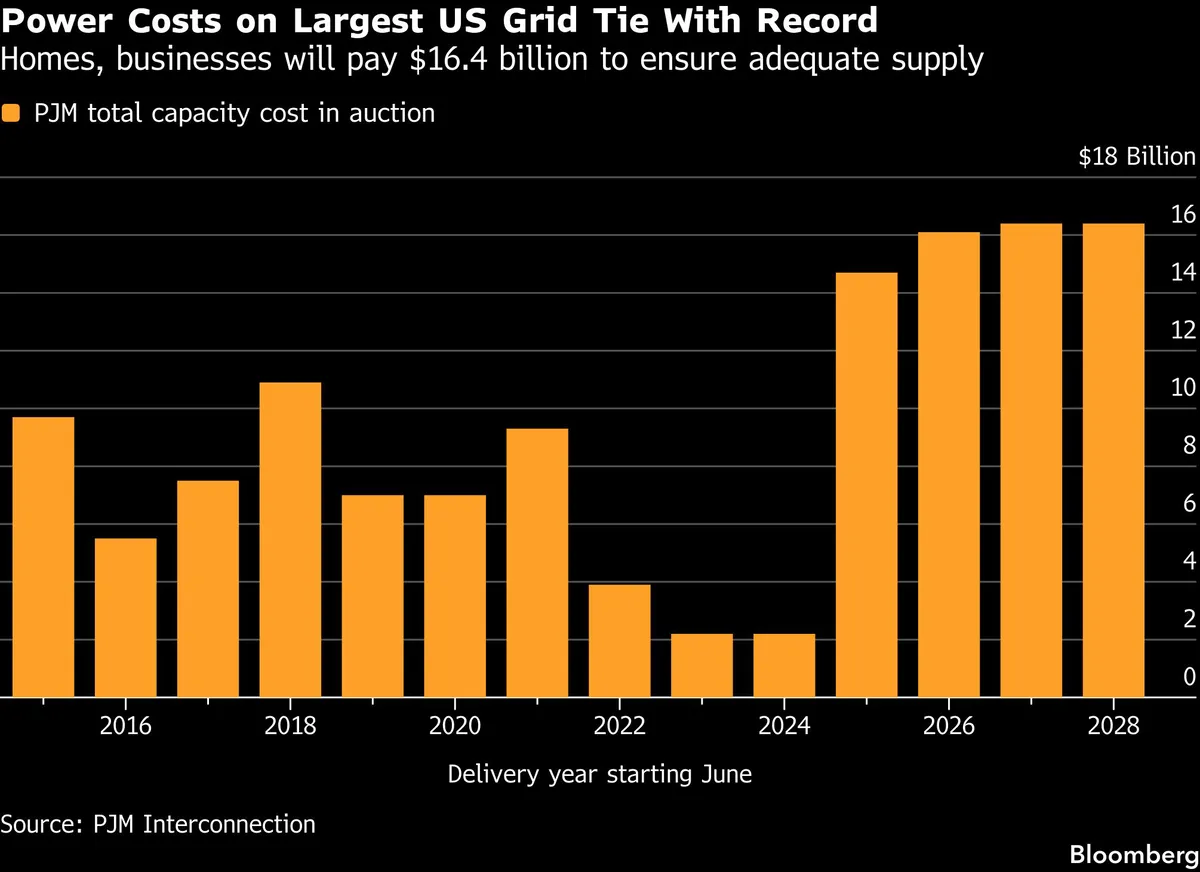
The rapid proliferation of artificial intelligence (AI) technologies has created a seismic shift in energy demand across the United States, particularly impacting the country's largest electric grid, PJM Interconnection LLC. The latest auction results indicate that the costs associated with supplying electricity have soared by more than 60%, a concerning trend that highlights the challenges faced by an aging infrastructure struggling to keep pace with the insatiable appetite of power-hungry data centers. As PJM serves 13 states and Washington, DC, the implications of this surge in power costs are felt not only by utility providers but also by consumers and businesses alike.
On July 15, 2026, PJM announced that its auction to procure power for the year starting June 2028 tied a staggering $16.4 billion record, further exacerbated by the growing contributions of data centers, which accounted for roughly $6.3 billion of that total. This increase in power supply costs, driven by demand from the burgeoning AI sector, raises several critical questions about the reliability of the electric grid, the financial burden on consumers, and the future of energy procurement strategies in an increasingly data-driven world.
Understanding the Grid and the Costs
The PJM Interconnection operates as a regional transmission organization, managing the flow of electricity across a vast network. Its role is crucial in ensuring that electricity supply meets demand, particularly during peak usage periods. The recent auction results reveal a troubling trend: the PJM grid failed for the third consecutive time to secure enough future supply commitments to maintain reliability. This failure is largely attributed to the rapid growth of data centers, which are essential for supporting AI operations but are also major consumers of electricity.
Impact on Consumers
The economic implications of this rising demand are significant. The burden on PJM ratepayers, which amounts to nearly $30 billion when factoring in previous auctions, underscores the financial strain consumers face as utility bills rise in tandem with power costs. The recent auction data indicates that the price ceiling reached $325 per megawatt-day, a figure that will inevitably appear in users' monthly utility bills. Without the price cap negotiated in 2024, costs would have skyrocketed to $554.72, demonstrating the critical nature of regulatory measures in moderating potential price inflation.
- Power costs increased by 60% due to data center demand.
- PJM's auction tied a previous record of $16.4 billion.
- Data centers accounted for approximately $6.3 billion of that total.
- The auction fell 6.8 gigawatts short of reliability targets.
- Consumers face a total burden of nearly $30 billion from these costs.
The Challenge of Supply and Reliability
The continuous growth of AI-driven data centers has created a mismatch between electricity supply and demand. The recent auction underscored this reality, revealing that the PJM grid fell short by 6.8 gigawatts—the equivalent of approximately seven traditional nuclear reactors—of the capacity needed to ensure reliability during peak demand. This year’s auction results reflect an alarming trend where data center load growth is outstripping the capacity of new electricity supplies, thereby jeopardizing grid stability and pushing prices to their limits.
Legal and Regulatory Framework
The implications of these developments extend beyond immediate financial concerns. As the PJM grid grapples with reliability issues, regulatory entities, including the Federal Energy Regulatory Commission (FERC), are under pressure to explore emergency procurement mechanisms. Such measures aim to alleviate the financial burden on consumers while addressing the pressing need for more robust power generation infrastructure. The focus will likely shift to ensuring that hyperscale data centers contribute equitably to the costs associated with the increasing demand they generate.
Future Directions and Recommendations
In light of the urgent need for reform, stakeholders across the energy landscape are advocating for swift action to bolster the electric grid's infrastructure. Drew Maloney, president of the Edison Electric Institute, emphasized the necessity for reform to lower costs and enhance the reliability of electricity supply. As the PJM system faces scrutiny from consumer groups and politicians alike, it is crucial that the grid operator submits a comprehensive proposal by the end of the month to outline how it will address the impending supply challenges.
Building a Sustainable Future
Addressing the challenges posed by AI-driven demand will require a multifaceted approach. This includes investing in new power generation technologies, promoting energy efficiency, and enhancing grid resilience. Furthermore, collaboration among federal, state, and local governments, as well as private sector stakeholders, will be essential in developing a cohesive strategy to ensure the stability and affordability of electricity for consumers.

Key Takeaways
- The demand from AI data centers is drastically increasing power costs, with a 60% surge reported.
- PJM Interconnection's auction results highlight a significant supply shortfall, leading to reliability concerns.
- Consumers could face nearly $30 billion in increased charges due to rising electricity costs.
- Regulatory measures and emergency procurement strategies are being considered to mitigate these challenges.

Frequently Asked Questions
What are data centers, and why are they important?
Data centers are facilities that house computer systems and associated components, such as telecommunications and storage systems. They play a crucial role in supporting cloud computing, big data analytics, and various online services, including those driven by AI technologies. Their increasing prevalence reflects the growing reliance on digital technologies in both consumer and business environments.
How does the PJM Interconnection auction work?
The PJM Interconnection auction is a competitive bidding process designed to procure electricity capacity for future use. Energy providers submit bids to supply electricity during peak demand periods, and the auction results determine the cost of that capacity. The auction is instrumental in ensuring that sufficient electricity supply is available to meet consumer demand while maintaining grid reliability.
What impact do rising power costs have on consumers?
Rising power costs directly affect consumers through increased utility bills. As energy prices rise, households and businesses may experience financial strain, leading to higher overall living costs. Additionally, if the grid's reliability is compromised, consumers could face power outages or disruptions, further complicating the economic landscape.
What steps can consumers take in response to rising energy costs?
Consumers can take several proactive measures to mitigate the impact of rising energy costs. This includes adopting energy-efficient appliances, utilizing smart home technology to optimize energy usage, and potentially exploring alternative energy sources, such as solar panels. Staying informed about energy market trends and participating in demand response programs can also help consumers manage their energy consumption and costs more effectively.
Comments
Coalition Launches Enhanced Cyber Insurance for Large Enterprises
In response to growing digital threats, Coalition introduces Active Cyber Insurance for Enterprises, offering up to $25 million in coverage for large U.S. businesses. This innovative solution comes on the heels of a strategic partnership with Allianz, aiming to bolster cyber resilience in an increasingly complex threat landscape.

Related articles






Popular in Business Insurance
- Surging War-Risk Insurance Rates in the Strait of Hormuz: What It Means for Shipping
- Ross & Yerger Insurance Faces Class Action Over Data Breach Allegations
- Sompo Expands U.S. Workers' Compensation Portfolio with Service Insurance Acquisition
- Legal Battle Unfolds Over $1 Million Truck Crash Insurance Payout
- Howden Group's Ambitious Journey Toward IPO and Expansion