United Airlines Sues Homesite Over $5 Million Cyber Insurance Claim
United Airlines files a lawsuit against Homesite Insurance for refusing to pay a $5 million claim related to a significant cyber outage. The airline argues that the claim is part of a much larger financial loss due to operational disruptions affecting thousands of passengers.
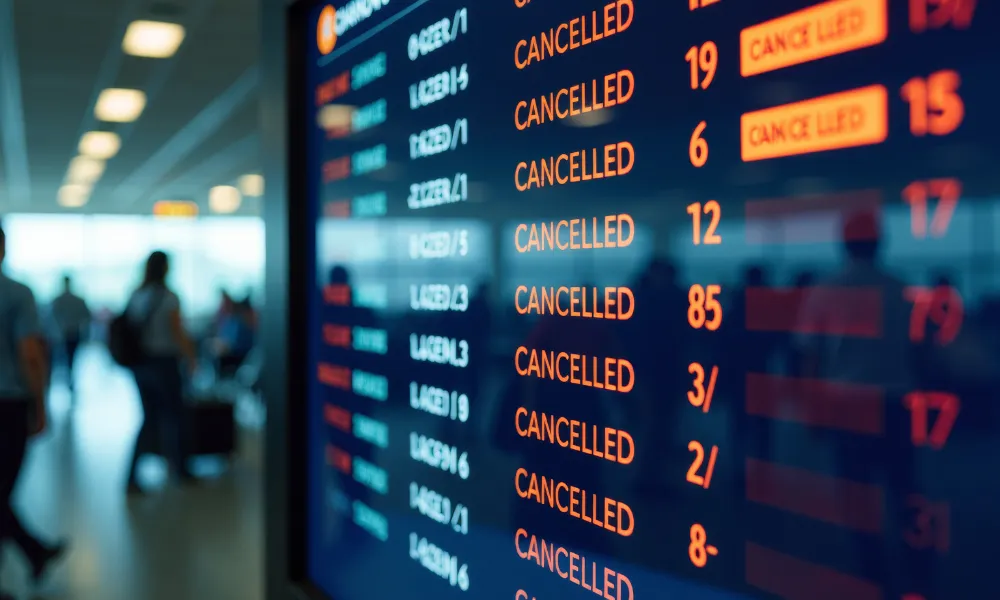
In a significant legal showdown, United Airlines has taken the bold step of suing Homesite Insurance Company for refusing to honor a $5 million cyber insurance claim stemming from a massive operational disruption caused by a software failure at CrowdStrike in July 2024. This lawsuit, filed on July 21, 2026, in the Northern District of Illinois, underscores not only the complexities of cyber insurance but also the potentially severe repercussions of digital vulnerabilities in today’s interconnected world.
The July 2024 incident saw a critical software update from CrowdStrike, a cybersecurity firm, crash millions of Windows systems globally. For United Airlines, the fallout was catastrophic, leading to the cancellation of over 1,600 flights and stranding more than 200,000 passengers during one of the peak travel weekends of the summer. This disruption highlights the increasing reliance on technology in the airline industry and raises critical questions about liability and risk management in an era where cyber threats are rampant.
The Nature of the Claim
At the heart of United Airlines' complaint is a breach of contract and bad faith claim against Homesite Insurance. The airline contends that the $5 million claim is a fraction of its total losses, which it estimates to be approximately $113 million. Within this total, the contested amount specifically concerns $20,423,430 allocated for passenger compensation related to the chaos that ensued from the outage. This compensation included expenses for meals, hotels, ground transportation, cash reimbursements, and travel credits provided to stranded travelers.
United Airlines asserts that these payments were not merely optional gestures but legally mandated under regulations set forth by the U.S. Department of Transportation (DOT). The DOT explicitly directed the airline to ensure passenger care during such disruptions, warning that failure to comply could expose the airline to civil penalties of up to $75,000 for each violation. Given the scale of the cancellations, the potential financial exposure could reach hundreds of millions, if not billions of dollars.
Policy Structure and Coverage Layers
The complexities of insurance coverage add another layer of intrigue to this case. United's insurance arrangement includes multiple layers of coverage, amounting to as much as $200 million in cyber insurance, above a self-insured retention of $50 million. The airline's policy is structured in layers, meaning that several insurers participate in covering losses at different levels. In this case, Homesite resides in the fourth layer of excess coverage, sharing risks with Indian Harbor Insurance Company.
While Indian Harbor has honored its obligation by paying its share of the claim, Homesite has taken a different stance, refusing to pay its half of the $5 million. This discrepancy is primarily due to differing interpretations of the policy language, particularly concerning an endorsement that expands the definition of “Loss” to include civil aviation fines or passenger compensation that the insured is legally liable to pay in relation to flight cancellations or delays.

Disputed Interpretations of Coverage
One of the pivotal issues in this dispute centers on how Homesite interprets the Civil Aviation Endorsement. United Airlines argues that this endorsement explicitly covers the payments it made to passengers, thereby obligating Homesite to fulfill its payment responsibilities. However, Homesite has characterized these payments as “voluntary” and “discretionary,” suggesting that the airline could have opted not to make them.
Additionally, Homesite has contended that United should have sought “prior written consent” from the insurer before disbursing funds to passengers. This raises critical questions about the operational realities in times of crisis. In high-pressure situations, airlines often prioritize customer service and compliance with regulatory requirements, which may not allow for the luxury of waiting for insurer approval.
Allegations of Bad Faith
United Airlines does not hold back in its allegations against Homesite, claiming that the insurer's position is “pretextual and meritless.” The complaint describes Homesite’s conduct as “vexatious and unreasonable” under Illinois law, which governs insurance practices in the state. This charge is particularly pertinent as Illinois law includes a statute, 215 ILCS 5/155, that addresses unreasonable claim denials and allows for penalties against insurers that fail to act in good faith.
The airline is not just seeking the unpaid $5 million but is also requesting attorneys' fees, costs, and potential penalties for Homesite’s alleged bad faith. The outcome of this legal battle could set a precedent for how cyber insurance claims are handled in the airline industry and beyond, particularly regarding the interpretation of policy language in the context of rapidly evolving digital threats.

Why This Matters for the Airline Industry
The implications of this lawsuit extend far beyond United Airlines and Homesite. As the airline industry becomes increasingly reliant on technology, the risk of cyber incidents grows, making robust cybersecurity measures and comprehensive insurance coverage more critical than ever. This case serves as a stark reminder of the importance of clear policy language and the need for effective communication between insurers and insured parties during crises.
For airlines and other businesses, understanding the nuances of their cyber insurance policies is essential. The failure to secure adequate coverage or to comprehend the terms can lead to significant financial repercussions. Companies should take the following steps:
- **Review Existing Policies:** Regularly assess and update cyber insurance policies to ensure they meet current operational needs.
- **Understand Coverage Limits:** Be aware of the specifics of coverage limits, including layers and self-insured retention amounts.
- **Engage Insurers Early:** In the event of a potential claim, communicate with insurers promptly to clarify obligations and coverage interpretations.
- **Document Everything:** Maintain thorough documentation of all financial transactions, especially in crisis situations, to support future claims.
- **Consult Experts:** Work with insurance professionals to navigate complex policy language and ensure comprehensive coverage.
Key Takeaways
- United Airlines is suing Homesite Insurance for a $5 million claim related to a cyber outage.
- The airline argues that the claim represents only a portion of its total losses, which exceed $113 million.
- The dispute highlights the complexities of cyber insurance and the critical need for clear policy language.
- Illinois law allows for penalties against insurers that deny claims in bad faith.
- The outcome of this case could impact how cyber insurance is understood and utilized across the airline industry.
Frequently Asked Questions
What led to United Airlines' lawsuit against Homesite?
The lawsuit stems from Homesite’s refusal to pay a $5 million claim related to a cyber outage caused by a faulty software update from CrowdStrike. United Airlines argues that the compensation payments made to passengers were legally mandated and should be covered under their insurance policy.
How does this case illustrate the importance of cyber insurance?
This case highlights the growing risks associated with cyber incidents in the airline industry. As technology becomes more integral to operations, having robust and clearly defined cyber insurance coverage is essential for protecting against significant financial losses resulting from disruptions.
What are the potential implications of the lawsuit for the airline industry?
The outcome of this legal battle may set a precedent for how cyber insurance claims are processed and interpreted in the airline sector. It could influence how airlines structure their policies and engage with insurers, particularly regarding coverage for passenger compensation during disruptions.
Comments
Berkley Insurance Sues Volunteers of America Over $2M in Unpaid Work
In a significant legal battle, Berkley Insurance is suing Volunteers of America for over $2 million regarding a stalled renovation project. The case raises important questions about performance bonds and contractor responsibilities in large construction projects.

Related articles






Popular in Business Insurance
- Surging War-Risk Insurance Rates in the Strait of Hormuz: What It Means for Shipping
- Ross & Yerger Insurance Faces Class Action Over Data Breach Allegations
- Sompo Expands U.S. Workers' Compensation Portfolio with Service Insurance Acquisition
- Legal Battle Unfolds Over $1 Million Truck Crash Insurance Payout
- Howden Group's Ambitious Journey Toward IPO and Expansion