Trucking Stocks Plummet Amid Legal Risks: A Closer Look at the Fallout
Trucking and logistics stocks are experiencing a significant downturn, largely due to legal concerns stemming from a recent court ruling. This article delves into the implications of these developments for brokers and investors.
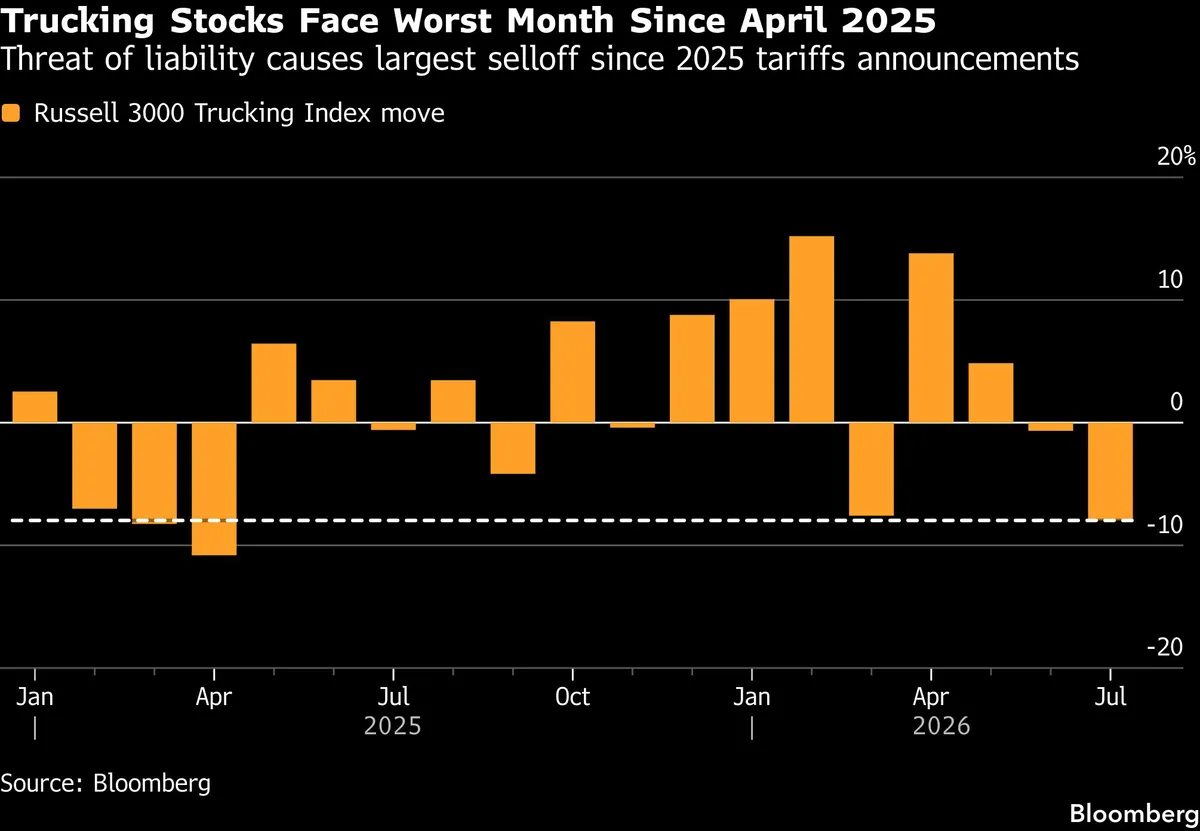
The trucking industry, often viewed as the backbone of American logistics, is witnessing a significant downturn in its stock performance, raising alarms among investors and stakeholders alike. The Russell 3000 Trucking Index has plummeted by more than 8% this month, marking its worst performance since the tariff-induced selloff in April of the previous year. Central to this decline are mounting legal concerns and disappointing earnings reports from major players in the sector, particularly freight brokers like CH Robinson Worldwide Inc.
This decline has sent tremors through the industry, as legal precedents set by a recent Supreme Court decision are beginning to unfold, creating a ripple effect that could redefine liability and risks for freight brokers across the nation. As investors scramble to assess the implications, the trucking sector's promising recovery from previous downturns now hangs in the balance.

The Legal Landscape Changing for Trucking Brokers
The core of the current crisis stems from a preliminary jury verdict in Dallas County against CH Robinson, which has seen its stock price drop a staggering 21% this month alone. This case is significant as it follows a Supreme Court decision from May that opened the floodgates for lawsuits against brokers for injuries caused by the motor carriers they hire. This legal shift poses a substantial new liability risk that can potentially affect all freight brokers, including notable firms like RXO Inc. and Landstar System Inc., whose stock prices have similarly taken a hit.
Understanding the Implications of the Ruling
The implications of the Dallas County verdict are severe. Analysts, including TD Cowen's Jason Seidl, have warned of a potential "wave of lawsuits" that could lead to inflated insurance premiums and rising claims costs across the industry. This legal uncertainty not only raises the stakes for the companies involved but also shifts the landscape of risk management in the trucking sector.
Market Reactions: A Rise and Fall
Before this month, the trucking sector had been on a notable upswing. After years of declining freight carrier rates, the industry was beginning to bounce back, with stock prices hitting record highs as demand surged. However, the recent legal developments have overshadowed these gains, causing a sharp reversal in market sentiment.
Disappointing earnings reports from key players such as Saia Inc., Knight-Swift Transportation Holdings Inc., and Covenant Logistics Group Inc. have exacerbated the situation. These companies reported weaker-than-expected results, leading to further declines in their stock prices. Analysts like Citi's Ari Rosa have pointed out that earnings performance has taken a backseat to liability concerns, emphasizing that the looming legal risks are top of mind for investors.

Investor Sentiment and Analyst Perspectives
The investor sentiment surrounding trucking stocks has shifted dramatically in light of the new legal realities. Following the Dallas verdict, some analysts have adjusted their ratings on stocks within the sector, reflecting a more cautious outlook. For instance, TD Cowen downgraded RXO to a sell rating, citing its heightened exposure to litigation risk.
Despite the negative trend, not all analysts are bearish on the trucking sector. Sergey Glinyanov of Freedom Capital upgraded CH Robinson's rating to buy, indicating confidence in the company's second-quarter results and its ability to maintain truckload profitability even amid rising costs. However, he cautioned that the ongoing appeals process stemming from the Texas verdict could extend for years, adding uncertainty to the company's future.
Understanding the Broader Economic Context
The trucking industry's current challenges come against a backdrop of broader economic conditions. The sector had previously benefited from a resurgence in freight rates as consumer demand rebounded post-pandemic. In 2026, trucking stocks were outperforming the broader market, with a 28% increase year-to-date compared to a 9.7% gain in the overall Russell 3000 index.
The recent downturn, however, illustrates how quickly market dynamics can change. As analysts point out, the summer months often bring a "swoon" in stock performance as companies report earnings, but the added layer of legal uncertainty has made this downturn particularly pronounced.
Key Takeaways
- Legal Risks: A recent court ruling has opened the door for lawsuits against freight brokers, significantly impacting market dynamics.
- Stock Performance: The Russell 3000 Trucking Index has fallen over 8% this month, the worst drop since last year.
- Investor Sentiment: Analysts are divided, with some downgrading ratings in light of increased litigation risk, while others maintain bullish outlooks based on robust performance metrics.
- Market Recovery: Despite recent declines, trucking stocks had been on a strong upward trajectory earlier this year, highlighting the sector's volatile nature.
Frequently Asked Questions
What specific legal changes are affecting trucking stocks?
The legal landscape for trucking stocks has shifted following a May Supreme Court decision that allows for lawsuits against freight brokers for injuries caused by hired motor carriers. This change has raised concerns about increased liability and the potential for a surge in litigation against companies in the sector.
How are investors reacting to the downturn in trucking stocks?
Investor sentiment has turned cautious, with many analysts adjusting their ratings in response to the heightened legal risks. Some companies, like RXO, have been downgraded to sell due to their increased exposure to potential lawsuits. Conversely, some analysts remain optimistic about companies like CH Robinson due to their strong financial performance, despite the looming legal challenges.
What does the future hold for the trucking industry?
The future of the trucking industry remains uncertain, particularly as the appeals process related to the recent verdict could take years. Analysts expect that while some companies may weather the storm, the overall landscape will be influenced heavily by ongoing legal developments and their impact on insurance costs and liability management.
Comments
Cyberattacks on Water Utilities Spark Debate Over Insurance Coverage
Recent cyberattacks on U.S. water systems raise concerns regarding the adequacy of cyber insurance coverage, especially regarding war exclusions. As state-linked activities increase, utilities must reassess their cybersecurity posture and insurance policies.

Related articles





Popular in Business Insurance
- Surging War-Risk Insurance Rates in the Strait of Hormuz: What It Means for Shipping
- Ross & Yerger Insurance Faces Class Action Over Data Breach Allegations
- Sompo Expands U.S. Workers' Compensation Portfolio with Service Insurance Acquisition
- Legal Battle Unfolds Over $1 Million Truck Crash Insurance Payout
- Howden Group's Ambitious Journey Toward IPO and Expansion