25 States Challenge Trump's New Tariffs in Major Legal Battle
A coalition of 25 states has filed a lawsuit against President Trump's new tariffs, claiming they are illegal and unjust. This article examines the implications for businesses, consumers, and trade policy.
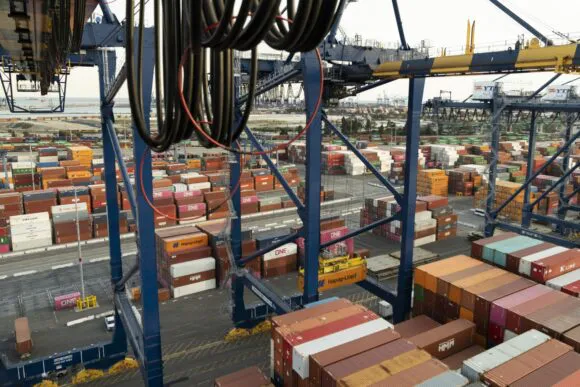
The trade landscape in the United States is once again facing upheaval as a coalition of 25 states has launched a legal challenge against President Donald Trump's recently imposed global tariffs. These tariffs, which came into effect last month, are the latest installment in a contentious saga of trade policy that has seen businesses, consumers, and state governments at odds with the Trump administration. This lawsuit, filed on August 3 in the U.S. Court of International Trade, highlights not only the ongoing disputes surrounding tariffs but also raises critical questions about the authority of the president in setting trade policy.
The states involved in this coalition include major economic players like New York, California, and Illinois, and they argue that the tariffs—ranging from 10% to 12.5% on imports from vital trading partners—are illegal under U.S. law. Their contention centers on the notion that the administration is misusing Section 301 of the Trade Act of 1974, a provision designed to address specific trade issues, by imposing broad tariffs that resemble those previously struck down by the Supreme Court. As this legal battle unfolds, it is imperative for businesses and consumers alike to understand the implications of these tariffs and the broader trade environment.

The Legal Basis of the Tariff Challenge
At the heart of the lawsuit is the assertion that Trump's administration is unlawfully invoking Section 301 to implement tariffs without the necessary legal grounding. Section 301 allows the U.S. Trade Representative, under presidential direction, to impose tariffs in response to discriminatory trade practices by other nations. However, critics argue that the current tariffs do not meet the criteria for such action and are instead reflective of a broader and unjustifiable tariff policy.
Understanding Section 301
The Trade Act of 1974’s Section 301 was originally intended to enable the U.S. government to respond to specific grievances regarding foreign trade practices. In this case, the administration claims the tariffs are a response to forced labor practices in the supply chains of approximately 60 economies. However, the states involved in the lawsuit contend that the administration's rationale is merely a pretext for imposing taxes that disproportionately affect American families and businesses. New York Attorney General Letitia James stated, "No matter how the administration tries to justify it, the law and our Constitution are clear that the president does not have the power to impose sweeping tariffs on whatever countries he wants."

The Economic Impact of Tariffs
The economic implications of these new tariffs are significant and far-reaching. Tariffs increase the cost of imported goods, which can lead to higher prices for consumers and squeezed profit margins for businesses reliant on foreign products. In practical terms, a 10% tariff on a $1,000 imported item translates to an additional $100 cost, which may ultimately be passed on to consumers. Small businesses, in particular, are likely to feel the pinch as they navigate increased costs while attempting to remain competitive in the market.
The Ripple Effects on Small Businesses
Small businesses are already expressing concerns about the impact of these tariffs. In a separate lawsuit filed by small business owners, including spice importer Burlap and Barrel Inc. and watch retailer Collective Horology LLC, plaintiffs argue that the tariffs lack a necessary "country-specific inquiry," which Congress intended when adopting Section 301. They claim that the tariffs are based on generalized assertions rather than a thoughtful analysis of how each country's practices affect U.S. commerce. This highlights the precarious position that many small businesses find themselves in as they confront not only the immediate financial burdens of tariffs but also the uncertainty that follows from legal disputes over their legitimacy.

The Broader Trade Policy Context
This lawsuit is just one chapter in an ongoing narrative of the Trump administration's trade policy, which has been characterized by a series of tariff impositions and legal challenges. The current tariffs are seen as a continuation of efforts to rebuild a tariff wall that was previously dismantled. Earlier tariffs imposed under the International Emergency Economic Powers Act (IEEPA) were ruled illegal by the Supreme Court, leading to further legal and economic complications. As the administration seeks to enforce new tariffs, it faces scrutiny over its adherence to established legal frameworks and the potential fallout from businesses seeking refunds for prior levies.
The Role of the Courts
The U.S. Court of International Trade will play a pivotal role in determining the fate of these tariffs. Legal experts suggest that the courts may grant more deference to the Trump administration's findings under Section 301 compared to previous challenges. Janet Whittaker, a senior counsel at the law firm Clifford Chance, noted that Section 301 has a well-established history as a tariff authority and requires a detailed process of notice, consultation, and investigation before tariffs can be enacted. This legal framework may pose challenges for the states in their bid to overturn the new tariffs.
Key Takeaways
- 25 states have filed a lawsuit challenging the legality of new tariffs imposed by the Trump administration.
- The tariffs range from 10% to 12.5% on imports from key trading partners.
- Small businesses are particularly affected by the increased costs associated with tariffs.
- The legal battle may reshape future trade policy and the president's authority over tariff impositions.
- The U.S. Court of International Trade will be crucial in determining the outcome of this legal challenge.
Frequently Asked Questions
What are the main arguments against the new tariffs?
The primary arguments against the new tariffs include claims that they are illegally imposed under Section 301 of the Trade Act of 1974 and that the stated justification regarding forced labor is merely a pretext. The coalition of states argues that these tariffs disproportionately harm American families and businesses, lacking the necessary legal foundations required for such impositions.
How do tariffs affect consumers and businesses?
Tariffs increase the costs of imported goods, which can lead to higher prices for consumers. For businesses that rely on imported materials or products, tariffs can squeeze profit margins and make it challenging to remain competitive. Ultimately, these economic pressures can trickle down to consumers through increased prices on everyday items.
What is Section 301 of the Trade Act of 1974?
Section 301 is a provision that allows the U.S. Trade Representative to impose tariffs in response to foreign trade practices deemed discriminatory or in violation of international trade agreements. However, it requires a detailed investigation and consultation process, which critics argue has not been followed in the current case.
What could be the outcome of the lawsuit?
The outcome of the lawsuit is uncertain, but if the court rules in favor of the states, it could lead to the repeal of the new tariffs and set a precedent for future trade policy. Conversely, if the court supports the administration's position, it may embolden further tariff actions and shape the landscape of U.S. trade relations.
Comments
CNA Financial: Navigating the Evolving Insurance Landscape in 2026
CNA Financial Corporation's recent Q2 report reveals a nuanced approach to underwriting in the commercial insurance market, indicating where brokers can expect firm rates and where flexibility may exist. This article explores the implications of CNA's financial results for policyholders and brokers alike.

Related articles






Popular in Business Insurance
- Surging War-Risk Insurance Rates in the Strait of Hormuz: What It Means for Shipping
- Ross & Yerger Insurance Faces Class Action Over Data Breach Allegations
- Sompo Expands U.S. Workers' Compensation Portfolio with Service Insurance Acquisition
- Legal Battle Unfolds Over $1 Million Truck Crash Insurance Payout
- Howden Group's Ambitious Journey Toward IPO and Expansion