Innovative Impact-Responsive Paint: A New Era in Measurement and Analysis
Discover the groundbreaking color-changing paint developed at Tufts University that tracks impacts without electronics, promising revolutionary applications across various fields.
Imagine a world where surfaces can visually communicate the force of an impact without the need for complicated electronic systems. This vision is becoming a reality thanks to a groundbreaking innovation from Tufts University's Silklab. Researchers have developed a novel paint that changes color in response to mechanical stress, providing an unprecedented method for measuring impacts. From enhancing safety in sports equipment to optimizing shipping processes and advancing healthcare diagnostics, the implications of this technology are both striking and wide-reaching.
Led by Fiorenzo Omenetto, the Frank C. Doble Professor of Engineering, the team at Silklab has created a paint that utilizes advanced materials science to provide real-time, quantitative data on impacts. This innovation is not just a leap forward in the realm of material science; it represents a fascinating convergence of art and technology, with potential applications that extend far beyond traditional boundaries.
The Science Behind Color-Changing Paint
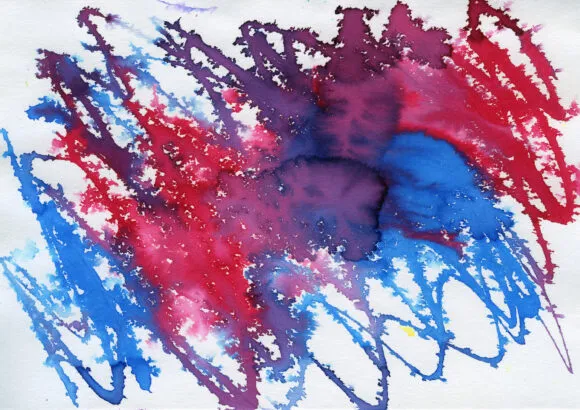
The core of this innovative paint consists of tiny spherical particles, each about the size of a human blood cell. These particles contain a color-changing polymer known as polydiacetylene, encased in a tougher shell made from silk fibroin proteins derived from the common silk moth. When the paint is subjected to mechanical stress, such as pressure or impact, the polydiacetylene undergoes a striking blue-to-red color transition.
Mechanics of Color Change
This transition occurs at the molecular level: the mechanical force alters the chemical structure of the polymer, affecting electron movement and, consequently, how the material interacts with light. As the impact intensity increases, the amount of red in the paint increases proportionally, enabling the paint to act as a built-in force meter. This allows for precise measurements of forces ranging from 100 to 770 newtons, which can correspond to everyday actions like a light tap or a powerful punch.
One of the most notable aspects of this paint is its versatility. It can be applied to various surfaces—be it paper, metal, plastic, or fabric—making it suitable for a wide range of applications. The paint can be brushed on, sprayed, or even cast to create a film, allowing it to conform to irregular shapes and surfaces easily.

Potential Applications Across Industries
The implications of this technology are vast and diverse. Here are some key areas where this innovative paint could make a significant impact:
- Sports Safety: The paint could be used on football helmets or other protective gear to monitor the severity of impacts and help assess concussion risks in athletes.
- Shipping and Logistics: By applying this paint to packaging, companies can track the handling history of goods, identifying whether items have been subjected to damaging forces during transit.
- Healthcare: The paint can be utilized in orthopedic insoles to analyze the gait of patients, providing valuable data for rehabilitation and treatment.
- Military and Industrial Use: Its ability to indicate exposure to blast forces could be vital for safety assessments in high-risk environments.
- Art and Music: Collaborations with artists and musicians can explore the paint's potential as a creative tool, visualizing impact patterns in performances.

Art Meets Science: A Unique Collaboration
A particularly intriguing application of this paint emerged from a collaboration between Tufts researchers and Grammy Award-winning drummer Terri Lyne Carrington. By applying the paint to drumheads, they were able to visualize the impact patterns of drumstick strikes during performances. This unique intersection of art and science showcases how the paint can create a visual representation of rhythm and force, transforming musical performances into dynamic visual experiences.
Enhancing Musical Training
Carrington expressed the potential educational benefits of this technology for aspiring drummers. By visualizing where and how hard they strike the drum, students can gain insights into their technique, learning to aim for the center of the drumhead for optimal sound quality. This concept reflects a broader potential for using impact-sensitive paint as a pedagogical tool across various disciplines.
Challenges and Future Directions
Despite its promising capabilities, the development of this paint does face challenges. The researchers must ensure that the paint remains cost-effective and easy to apply in varying conditions. As they look to scale production, maintaining the integrity of the material properties while expanding its applications will be critical.
Furthermore, as with any new technology, regulatory and safety considerations will need to be addressed, particularly in areas like healthcare and sports. As the paint is integrated into different applications, establishing guidelines and standards for its use will be essential for ensuring its effectiveness and safety.

Key Takeaways
- The innovative paint developed at Tufts University changes color upon impact, providing real-time data on force levels.
- Applications span various fields, including sports safety, logistics, healthcare, and the arts.
- The technology merges science and creativity, highlighting the potential for interdisciplinary collaboration.
- Future developments will focus on scalability, cost-effectiveness, and regulatory compliance.
Frequently Asked Questions
How does the paint change color?
The paint changes color due to a chemical reaction in the polydiacetylene polymer when mechanical stress is applied. This stress alters the molecular structure, which in turn affects electron movement and light absorption, resulting in a transition from blue to red. The intensity of the red indicates the level of force applied, allowing for precise measurement without electronics.
What are the potential uses of this paint in sports safety?
In sports safety, the paint can be applied to helmets and protective gear to visually indicate the severity of impacts during play. By monitoring these impacts, athletes, coaches, and medical staff can assess concussion risks and make informed decisions about player safety, helping to prevent serious injuries.
Can this paint be used in medical applications?
Yes, the paint has potential medical applications, particularly in orthopedics. For instance, it can be applied to insoles to analyze gait patterns in patients. By visualizing the impacts on different parts of the foot, healthcare providers can gather valuable data to inform rehabilitation strategies and improve patient outcomes.
What challenges does the paint face for widespread adoption?
While the paint shows great promise, challenges include ensuring cost-effectiveness, scalability for mass production, and addressing regulatory concerns, especially in healthcare and sports. Establishing standards for its use and ensuring the integrity of its properties during application will be crucial for its successful integration into various industries.
Comments
Extreme Heat Wave Engulfs Two-Thirds of the U.S.: What You Need to Know
A dangerous heat wave is sweeping across the United States, bringing record-breaking temperatures and health risks. This article explores the causes, effects, and necessary precautions.

Related articles
Popular in Guides
- Texas Hill Country Floods: Lessons Learned and Warning Systems Tested
- El Niño: The Strongest Weather Phenomenon in Decades
- Meta's Controversial AI 'Nudify' Ads: A Deep Dive into the Scandal
- July 2026: The Hottest Month in U.S. History and Its Implications
- Record-Breaking Heat: The Impact of July 2026 on Climate and Insurance