Edison Challenges Liability in 2025 Los Angeles Wildfire Case
Southern California Edison faces a legal battle over its alleged role in the devastating 2025 Eaton Fire. The utility argues against liability, citing a dormant transmission tower and complex legal doctrines.

The aftermath of the devastating Eaton Fire in Los Angeles has left a significant mark not just on the landscape but also on the legal landscape as Southern California Edison (SCE) finds itself in the crosshairs of lawsuits from thousands of affected residents and businesses. With over 9,400 structures reduced to ashes and 19 lives claimed, the stakes are high for the utility company as it prepares to defend itself against claims of negligence and liability in a court of law. The implications of this case extend far beyond SCE, potentially reshaping the way utilities are held accountable for wildfire damages in California.
At the heart of this legal battle lies a dormant transmission tower that has not been operational since 1971. In a recent court filing, SCE has urged a Los Angeles judge to reject claims that it should be held liable for the fire, asserting that the tower's idleness exempts it from California's strict liability laws governing utility infrastructure. As the legal proceedings unfold, this case raises critical questions about the intersection of climate change, utility responsibility, and the rights of wildfire victims.
The Eaton Fire: A Timeline of Destruction
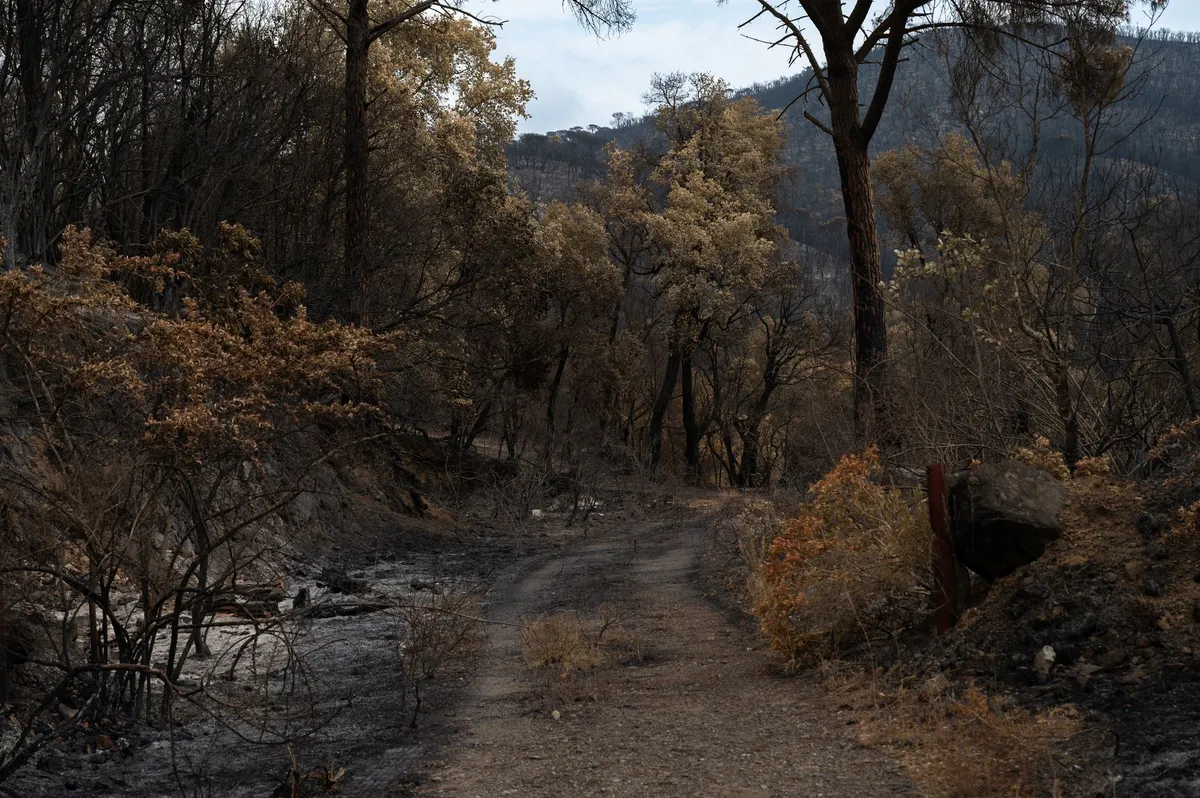
The Eaton Fire erupted in 2025, engulfing the middle-class neighborhood of Altadena and expanding to scorch approximately 14,000 acres in the surrounding area. The fire's rapid spread was exacerbated by dry conditions and high winds, common during California’s wildfire season. Eyewitness accounts detail harrowing evacuations and the overwhelming loss faced by families and businesses in the fire's path.
Legal Background and the Doctrine of Inverse Condemnation
California law imposes strict liability on utilities for damages caused by their equipment if it is determined that the equipment ignited a fire. This legal doctrine, known as inverse condemnation, holds utilities accountable regardless of fault. It was formulated to protect property owners from the devastating effects of wildfires, particularly in a state where such events have become increasingly frequent and severe due to climate change.
In this case, the legal proceedings are complicated by the fact that SCE claims the transmission tower in question was removed from service and disconnected from the grid for decades. The utility argues that since the tower was not serving any public purpose at the time of the fire, it does not fall under the inverse condemnation rule. This argument hinges on the interpretation of what constitutes “public use” in the context of utility infrastructure.
Challenges Faced by Plaintiffs and Insurers
While SCE rallies its defenses, plaintiffs—including homeowners, businesses, and insurance companies—are pursuing claims for damages that have already cost insurers billions of dollars in payouts. The insurers are seeking a court ruling that would compel SCE to compensate victims under the inverse condemnation doctrine. This legal maneuver is crucial for the insurers, who are not only seeking to recover their losses but also to hold SCE accountable for its alleged negligence.
- Key Points from the Lawsuit:
- Over 10,000 plaintiffs claim damages from the Eaton Fire.
- Two electrical faults were recorded on SCE’s equipment on the night of the fire.
- Multiple videos reportedly show SCE’s equipment igniting the fire.
- The official investigation into the fire's cause is ongoing.
Evidence and Counterarguments
The insurers and the plaintiffs argue that the evidence presented clearly links SCE’s equipment to the ignition of the fire. They highlight two electrical faults recorded on the night of the fire, supported by video evidence of arc flashes at the location where the fire allegedly started. In response, SCE contends that other factors, such as overgrown brush and failures in local water systems, may have contributed to the fire's rapid spread and the extensive damage it caused.
Gerald Singleton, a lead attorney for the plaintiffs, has expressed confidence in the strength of the evidence against SCE, stating that the utility will have a tough time arguing against the application of inverse condemnation given the available video footage. This highlights a critical point in the ongoing litigation: the role of tangible evidence in establishing liability.
The Broader Impact on Utility Regulations
The implications of the Eaton Fire case extend beyond the immediate parties involved. As wildfires continue to threaten the western United States, the outcomes of such lawsuits could influence regulatory frameworks governing utility companies and their responsibilities. Utilities across California and beyond are already grappling with heightened scrutiny and potential regulatory changes aimed at preventing future disasters.
Climate Change and Utility Accountability
The increasing frequency of wildfires in California is often attributed to climate change, which has resulted in drier conditions, higher temperatures, and an extended wildfire season. As climate-related disasters become more prevalent, the legal and financial responsibilities of utility companies are likely to evolve. If courts rule in favor of the plaintiffs in the Eaton Fire case, it could set a precedent for future wildfire litigation, compelling utilities to invest more heavily in infrastructure improvements and fire prevention measures.

Key Takeaways
- SCE contests liability for the Eaton Fire, citing the idleness of the transmission tower.
- Inverse condemnation holds utilities liable for fire damages even without proven negligence.
- The case could reshape utility regulations and accountability in wildfire incidents.
- Significant evidence links SCE’s equipment to the fire’s ignition, complicating the utility's defense.
Frequently Asked Questions
What is inverse condemnation?
Inverse condemnation is a legal doctrine in California that allows property owners to seek compensation from utility companies if their equipment is found to have caused a fire, regardless of whether the utility was negligent. This doctrine aims to protect homeowners and businesses from the financial repercussions of wildfires, especially in a state where such events are increasingly common.
How does the idleness of the transmission tower affect the case?
Southern California Edison argues that the transmission tower, which has been out of service since 1971, should not be subject to the strict liability rules governing public utilities. They contend that because the tower was not operational and did not serve any customers at the time of the fire, it does not meet the criteria for inverse condemnation, which requires that the infrastructure serve a public use.
What are the potential consequences for Southern California Edison?
If the court finds SCE liable for the Eaton Fire, the utility could face significant financial repercussions, including compensating thousands of plaintiffs for their losses. Additionally, a ruling against SCE could lead to increased regulatory scrutiny and pressure to improve safety measures to prevent future wildfires, thereby impacting how utilities operate across California and potentially nationwide.
How can affected individuals seek compensation?
Affected homeowners and businesses can seek compensation through their insurance providers or by pursuing legal action against Southern California Edison. Insurers are already taking steps to recover their losses from the utility. Victims should document their losses, maintain communication with their insurers, and consider consulting legal counsel to navigate potential claims against SCE.
Comments
Navigating the Future: AI Coverage and Digital Infrastructure Insurance
CFC Insurance is leading the charge with affirmative AI coverage for media companies, while Lockton unveils a practice dedicated to digital infrastructure. Here's what it means for businesses.

Related articles





Popular in Business Insurance
- Surging War-Risk Insurance Rates in the Strait of Hormuz: What It Means for Shipping
- Ross & Yerger Insurance Faces Class Action Over Data Breach Allegations
- Sompo Expands U.S. Workers' Compensation Portfolio with Service Insurance Acquisition
- Legal Battle Unfolds Over $1 Million Truck Crash Insurance Payout
- Howden Group's Ambitious Journey Toward IPO and Expansion