Cowbell Unveils OMNI: A Game-Changer in AI-Driven Insurance Underwriting
Cowbell has launched OMNI, an innovative AI-native underwriting system aimed at enhancing decision-making in specialty insurance. This development could reshape the landscape for small and medium-sized enterprises (SMEs) facing chronic underinsurance.
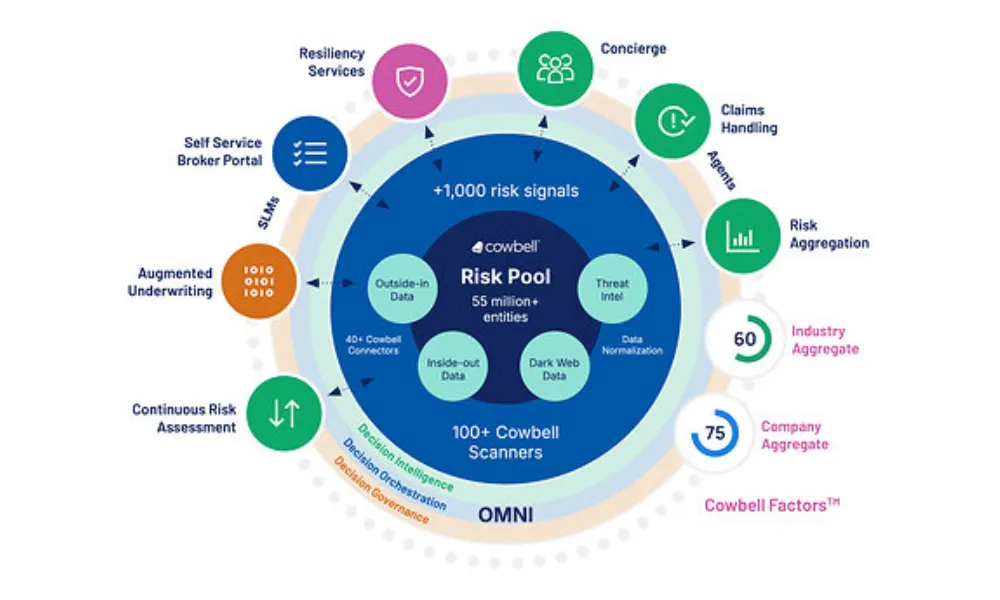
In an era where technology and insurance are increasingly intertwined, Cowbell has taken a significant leap forward with the launch of OMNI, an AI-native Decision Intelligence System. This innovative platform aims to revolutionize the underwriting process within specialty insurance, particularly for small and medium-sized enterprises (SMEs). By integrating advanced decision intelligence, workflow automation, and stringent governance, OMNI stands to streamline the insurance lifecycle, from underwriting to claims management and product development. As chronic underinsurance plagues the SME sector, Cowbell’s endeavor may not only open new avenues for coverage but also enhance the speed and accuracy of decision-making.
Cowbell, founded in 2019 and based in Pleasanton, California, has raised over $200 million, with a notable $60 million investment from Zurich Insurance Group in 2024. The company’s vision is to provide data-driven underwriting that continuously assesses risk rather than relying solely on static questionnaires. This approach is particularly crucial as the cyber insurance landscape evolves and the need for more granular, real-time coverage becomes evident. The recent launch of OMNI is a testament to Cowbell's commitment to addressing the unique challenges faced by SMEs in securing appropriate insurance coverage.
Understanding the Mechanics of OMNI
OMNI is designed to tackle a persistent challenge in specialty insurance: the underwriting of high-volume, lower-premium excess and surplus (E&S) business. Traditionally, underwriting in this space has been labor-intensive, often leading to inefficiencies and delayed responses to client needs. With OMNI, Cowbell aims to expedite the delivery of non-admitted quotes, reducing the timeframe from days or weeks to mere minutes.
How OMNI Works
The system leverages specialized AI agents that assist human underwriters by:
- Analyzing insurance submissions in real-time
- Evaluating risk profiles based on a global risk pool of over 55 million entities
- Generating comprehensive coverage and pricing recommendations
While the AI plays a critical role in decision-making, human underwriters retain final authority, ensuring a balance between automated efficiency and expert judgment. This collaborative approach allows for faster and more reliable underwriting decisions, which is crucial in a market characterized by increasing complexity and risk.

Impact on Small and Medium-Sized Enterprises
The introduction of OMNI arrives at a time when cyber insurance penetration among small businesses in the U.S. is alarmingly low, estimated between 10% to 20%. In contrast, large corporations enjoy penetration rates of 60% to 70%. This disparity highlights a significant opportunity for Cowbell and underscores the importance of innovative solutions that cater specifically to the needs of SMEs.
Addressing Underinsurance
According to estimates from Munich Re, the addressable market for small business insurance in the U.S. stands at approximately $175 billion, with around 75% of small businesses underinsured. This gap presents a unique challenge but also a compelling business opportunity for insurers willing to adapt their offerings.
Cowbell’s focus on continuous, data-driven underwriting allows for more tailored and timely coverage options. By continuously reassessing risks throughout the policy year rather than only at renewal, Cowbell can provide SMEs with insurance solutions that better reflect their current risk profiles and needs.

The Competitive Landscape
Cowbell operates in a competitive environment filled with other AI-forward cyber insurers such as Coalition, At-Bay, Resilience, and Corvus (recently acquired by Travelers). Each of these companies offers unique features, but Cowbell differentiates itself through its emphasis on small businesses and its innovative data-driven underwriting model.
Strategic Advantages
While Coalition integrates continuous security monitoring with its coverage, At-Bay emphasizes a hybrid approach to underwriting that accounts for AI vendor and third-party model risks. Cowbell’s strength lies in its commitment to smaller enterprises and the continuous assessment of risk, ensuring that pricing is closely aligned with a policyholder's observed risk profile.
Regulatory Considerations and Compliance
As the insurance industry increasingly adopts AI technologies, regulators are beginning to tighten their oversight of algorithmic decision-making. More than 24 states and the District of Columbia have adopted the National Association of Insurance Commissioners (NAIC) Model Bulletin on the Use of Artificial Intelligence Systems by Insurers, which mandates that insurers maintain a written AI governance program that covers model validation, bias testing, and third-party AI oversight.
Implications for Cowbell
Cowbell’s introduction of OMNI occurs alongside these regulatory shifts, making documentation and compliance critical. The company’s internal AI performance measurement tool, Bellwether, is designed to track the adoption and outcomes of AI-assisted decisions, ensuring that they remain auditable and compliant with emerging regulations. This proactive approach to governance not only reinforces Cowbell’s commitment to ethical AI use but also positions it favorably in a landscape where regulatory scrutiny is intensifying.

Future Prospects and Challenges
The launch of OMNI is just the beginning for Cowbell as it seeks to scale its operations further into claims management and cyber resilience. With reported growth in new business of 53% since deploying the platform, the effectiveness of OMNI will be put to the test as it expands its capabilities and geographic reach, including potential expansion into European and Asia-Pacific markets.
Measuring Success
The real challenge lies in whether OMNI can sustain its reported gains as it navigates the complexities of claims processing and the intricacies of cyber insurance. As the specialty insurance market continues to evolve, Cowbell's innovative approach could either pave the way for a new standard in underwriting or face hurdles in an increasingly competitive and regulated environment.
Key Takeaways
- OMNI Launch: Cowbell has developed an AI-native underwriting system to streamline insurance processes for SMEs.
- Rapid Quote Delivery: The platform allows for quick delivery of non-admitted quotes, reducing timelines from days to minutes.
- Underinsurance Crisis: About 75% of small businesses are underinsured, highlighting a significant market opportunity.
- Regulatory Compliance: Cowbell’s governance measures are designed to meet increasing regulatory scrutiny of AI in insurance.
- Market Expansion: The company aims to extend its operations to Europe and Asia-Pacific, testing the scalability of its innovative solutions.
Frequently Asked Questions
What is Cowbell's OMNI system?
OMNI is Cowbell’s newly launched AI-native Decision Intelligence System designed to enhance various aspects of the insurance lifecycle, including underwriting, claims, and product development. It integrates decision intelligence with workflow automation to expedite the insurance process, particularly for small and medium-sized enterprises.
How does OMNI improve the underwriting process?
OMNI improves underwriting by utilizing specialized AI agents that assist human underwriters in analyzing submissions and evaluating risks. This collaboration allows for faster decision-making and recommendations for coverage and pricing, which are ultimately approved by human underwriters. This efficiency is especially beneficial for high-volume, lower-premium E&S business.
What challenges do small businesses face in obtaining insurance?
Small businesses often struggle with underinsurance, with estimates suggesting that 75% are inadequately covered. Factors contributing to this include a lack of awareness about cyber risks, perceived high costs of insurance, and the complexity of obtaining appropriate coverage. Cowbell's focus on SMEs aims to address these challenges through innovative underwriting practices.
How is regulatory oversight changing for AI in insurance?
Regulatory scrutiny of AI in insurance is increasing, with many states adopting guidelines that require insurers to maintain governance programs for their AI systems. These programs cover aspects such as model validation and bias testing, ensuring that AI decision-making processes are transparent and accountable. Cowbell is proactively addressing these requirements with its internal governance measures.
Comments
Navigating the Future: AI Coverage and Digital Infrastructure Insurance
CFC Insurance is leading the charge with affirmative AI coverage for media companies, while Lockton unveils a practice dedicated to digital infrastructure. Here's what it means for businesses.

Related articles







Popular in Business Insurance
- Surging War-Risk Insurance Rates in the Strait of Hormuz: What It Means for Shipping
- Ross & Yerger Insurance Faces Class Action Over Data Breach Allegations
- Sompo Expands U.S. Workers' Compensation Portfolio with Service Insurance Acquisition
- Legal Battle Unfolds Over $1 Million Truck Crash Insurance Payout
- Howden Group's Ambitious Journey Toward IPO and Expansion