The Role of AI in Commercial Underwriting: Efficiency vs. Decision Quality
A recent survey reveals that while AI is streamlining administrative tasks for underwriters, it falls short in enhancing decision quality. This raises important questions about the future of underwriting in the insurance industry.

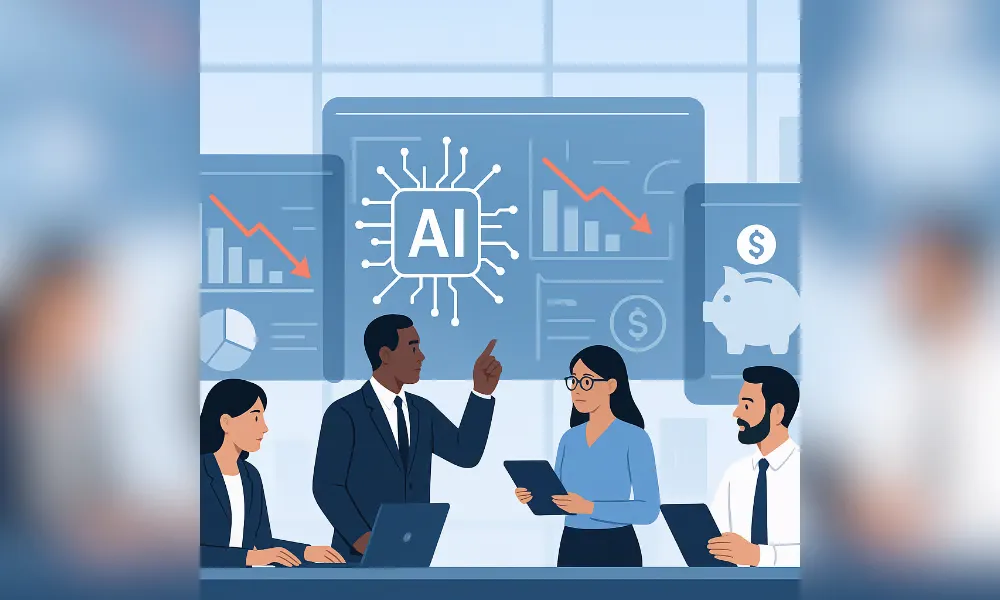
The insurance industry is undergoing a technological revolution, with artificial intelligence (AI) promising to transform the landscape of commercial underwriting. Yet, a recent survey indicates that while AI is indeed saving time on administrative tasks for senior underwriters, it has not significantly improved the quality of decision-making. This dichotomy raises critical questions about the future of underwriting, the handling of risk, and the overall effectiveness of insurance operations.
According to the Underwriting Edge 2026 report, published by hyperexponential (hx), a vendor specializing in AI underwriting software, the findings stem from a comprehensive survey conducted in June involving 350 senior commercial property and casualty (P&C) underwriters across the United States and the United Kingdom. The results highlight a growing tension in the insurance industry: the need for enhanced efficiency through technology versus the necessity for informed, nuanced decision-making in a complex risk landscape.
The Survey: Time Savings vs. Decision Quality
Among the underwriters surveyed, **51 percent** reported that AI's most significant contribution has been the reduction of time spent on manual administrative tasks. However, in stark contrast, only **21 percent** indicated that AI has improved the quality of their underwriting decisions. This disparity suggests that AI is being applied to the wrong problems, focusing on efficiency rather than the nuanced decision-making that underwriters require.
When asked about the factors undermining their decision quality, underwriters identified several key issues:
- Inconsistent submission data: **44 percent** of respondents highlighted this as a primary concern.
- Pressure to bind quickly: **38 percent** noted the urgency to finalize decisions as a detrimental factor.
- Lack of context on similar prior risks: **35 percent** expressed frustration over insufficient historical context during decision-making.
- Manual data entry across systems: This workflow blocker was cited by **42 percent** of underwriters as an impediment to efficient processes.

The Need for Context in Underwriting Decisions
Underwriters conveyed a strong preference for AI that enhances context during decision-making rather than merely accelerating the process. The survey revealed that when given a choice between a faster setup or one that provides more context and reasoning, a majority consistently opted for context. This preference was particularly pronounced for features like live book signals, with **73 percent** of underwriters favoring contextual insights over speed.
This desire for context rather than speed underscores a broader concern within the underwriting community: the fear of losing the nuanced judgment that senior underwriters bring to the table. As **44 percent** of respondents identified it as their top concern, there is a palpable anxiety about the long-term implications of relying too heavily on AI for decision-making.
Investment Trends: Where the Money Goes
The survey also examined investment priorities among commercial P&C carriers in the next 12 to 18 months. Surprisingly, coaching and knowledge transfer—areas crucial for capturing senior judgment—ranked last, with only **8 percent** of underwriters indicating that their organizations are investing in these efforts. In contrast, investments in end-to-end workflow automation and submission ingestion topped the list, with **52 percent** and **48 percent**, respectively.
This investment gap raises important questions about the future of underwriting. If organizations prioritize technology that streamlines processes at the expense of preserving institutional knowledge and judgment, they risk undermining the quality of their underwriting decisions. The findings also show a geographical divide, with **37 percent** of U.S. underwriters believing that senior judgment primarily resides in individuals’ heads, compared to **26 percent** in the U.K.

The Future of Underwriting: Balancing Technology and Human Insight
As the landscape of commercial underwriting evolves, it is clear that underwriters want AI to assist rather than replace human judgment. The survey indicates that underwriters envision an ideal future where AI handles data assembly, triages submissions, and drafts initial assessments, while the final decisions on complex risks remain firmly in human hands.
Underwriters across all levels of seniority expressed a consistent preference for an AI framework that suggests options while leaving the final approval to a person. This approach would allow for the maintenance of underwriting craft and the deep contextual understanding that is essential for assessing complex risks accurately.
Implications for the Insurance Industry
The findings of the Underwriting Edge 2026 report highlight the critical need for the insurance industry to recalibrate its approach to AI integration. The push for efficiency through automation should not come at the expense of informed decision-making. As analytics investments in P&C carriers accelerate, the emphasis should be on enhancing the quality of judgment rather than merely optimizing processes.
According to WTW's 2026 analytics survey, carriers that exhibit stronger analytics capabilities achieve combined ratios six percentage points lower than those that adopt technology more slowly. This points to a clear competitive advantage for organizations that can effectively balance technological investments with the preservation of human insight.

Key Takeaways
- AI is saving time on administrative tasks for underwriters but is not significantly improving decision quality.
- Underwriters prefer AI that enhances contextual understanding over speed in decision-making.
- Investment trends show a concerning focus on automation at the expense of knowledge transfer and coaching.
- Maintaining human judgment in underwriting remains crucial for effective risk assessment.
- Insurance carriers with strong analytics capabilities outperform their competitors.
Frequently Asked Questions
What are the main benefits of AI in underwriting?
The primary benefits of AI in underwriting lie in its ability to automate repetitive administrative tasks, thereby saving time for underwriters. This includes data entry, submission triage, and the drafting of preliminary assessments. By reducing the administrative burden, underwriters can focus more on complex decision-making and risk assessment.
Why do underwriters express concern about AI replacing human judgment?
Underwriters are concerned that an over-reliance on AI could lead to the erosion of nuanced human judgment, which is vital for making informed decisions on complex risks. The fear is that AI might make autonomous decisions too quickly, potentially overlooking critical contextual factors that could influence the outcome of a submission.
How should insurance companies approach AI investments in underwriting?
Insurance companies should adopt a balanced approach to AI investments, ensuring that while they enhance efficiency through automation, they also prioritize capturing and transferring senior judgment and expertise. Investing in coaching and knowledge transfer should be as crucial as technology investments to maintain high-quality underwriting decisions.
What role does context play in underwriting decisions?
Context is essential in underwriting decisions as it allows underwriters to assess risks based on historical data and similar cases. Understanding the nuances of past risks can significantly improve decision-making quality, ensuring that underwriters do not make hasty decisions based solely on automated data analysis.
Comments
Pooled Employer Plans Surge: A New Era for Small Businesses
The pooled employer plan (PEP) market has dramatically expanded, exceeding $34 billion in assets as small employers increasingly adopt this innovative retirement solution. This article explores the implications of this growth for employers and the landscape of retirement planning.

Related articles






Popular in Business Insurance
- Surging War-Risk Insurance Rates in the Strait of Hormuz: What It Means for Shipping
- Ross & Yerger Insurance Faces Class Action Over Data Breach Allegations
- Sompo Expands U.S. Workers' Compensation Portfolio with Service Insurance Acquisition
- Legal Battle Unfolds Over $1 Million Truck Crash Insurance Payout
- Howden Group's Ambitious Journey Toward IPO and Expansion