The Economic Stakes of CUSMA: A Looming Job Crisis for Canada
A recent report warns that a breakdown of the CUSMA could cost Canada over 100,000 jobs, highlighting the urgent need for successful negotiations. This article explores the implications of these potential changes on various sectors and the broader North American economy.
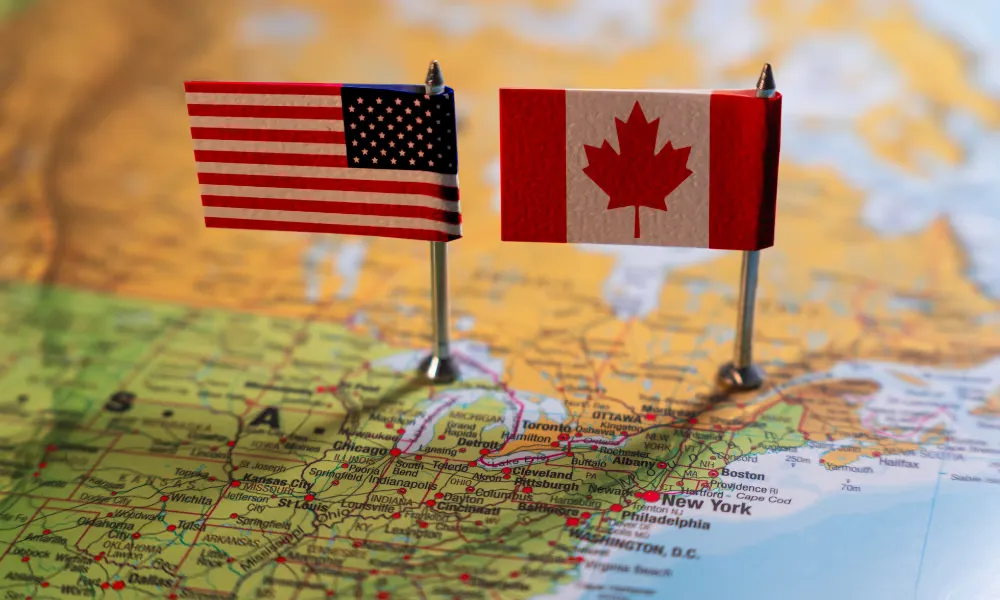
The Canada-United States-Mexico Agreement (CUSMA), known as the US-Mexico-Canada Agreement (USMCA) in the U.S., has been a critical trade framework since it was enacted in July 2020. However, a recent report from the Canadian American Business Council (CABC) has raised alarms about the potential consequences should the agreement face a complete breakdown. The report forecasts that such a scenario could lead to a staggering loss of 102,000 jobs across Canada, highlighting the precarious nature of the bilateral trade relationship and the extensive ripple effects on various sectors of the economy.
The CABC's analysis does not merely paint a gloomy picture; it also presents a contrast between possible outcomes. A successful renegotiation of CUSMA could result in the creation of 98,000 jobs in Canada and an additional 137,000 jobs in the United States by the year 2027, compared to maintaining the status quo. This stark contrast underscores the importance of effective negotiations and the significant economic implications that hinge on the decisions made in the coming months.
Understanding the Economic Impacts of CUSMA
To appreciate the full scope of the CABC report, it’s essential to delve deeper into the three potential scenarios modeled following the July 1, 2026, deadline for CUSMA renewal: the Status Quo, a Successful Renegotiation, and a complete breakdown of the agreement. The findings illustrate not only the potential job losses but also the sector-specific vulnerabilities that could emerge under each scenario.
Potential Job Losses and Sector Vulnerabilities
- Breakdown Scenario: 214,000 jobs lost in the U.S. and 102,000 jobs lost in Canada.
- Status Quo: No significant job gains or losses, but continued uncertainty.
- Successful Renegotiation: 137,000 jobs created in the U.S. and 98,000 jobs created in Canada.
Manufacturing industries are projected to bear the brunt of job losses, particularly in sectors that are heavily reliant on tariff-free access to markets. The report notes that service sectors will also be impacted, as reduced disposable incomes from job losses could lead to decreased consumer spending. This decrease in spending would, in turn, lower demand for transportation, construction, and professional services, further exacerbating the economic fallout.

The Regional Implications of CUSMA Changes
Geographically, the report identifies several provinces that are particularly vulnerable to the repercussions of tariff changes: Ontario, Quebec, Manitoba, and New Brunswick. These provinces have significant concentrations of industries such as automotive, metals, and machinery manufacturing, which are directly affected by tariffs. Ontario and Quebec, the largest beneficiaries under a successful renegotiation, are also the most at risk of economic damage under a breakdown scenario. This dichotomy emphasizes the regional disparities in economic exposure and highlights the need for targeted strategies to mitigate risks.
Understanding the Tariff Impacts
The CABC report further elaborates on the disproportionate impact of tariffs on Canadian industries compared to their U.S. counterparts. It notes that the sectoral impacts of tariffs can be four to six times more severe for Canadian manufacturing industries, primarily due to their greater dependence on bilateral trade. This dependency means that Canadian businesses are more vulnerable to fluctuations in trade policy and tariff rates, making it essential for policymakers to prioritize stable trade relations to safeguard jobs and economic growth.

The Call for Predictability in Trade Relations
As the CUSMA negotiations unfold, business leaders on both sides of the border are clamoring for clarity and predictability. CABC CEO Beth Burke stresses that the decisions made today will have long-lasting implications for North America’s economic competitiveness. The urgency of this situation is magnified by the ongoing economic instability, which has already led to declines in business investment across Canada for five consecutive quarters. With inflation tied to tariffs expected to persist, the stakes are higher than ever.
Household Implications of CUSMA Outcomes
The CABC report also quantifies the impact on individual households, revealing that choosing a successful renegotiation over a breakdown scenario could yield significant financial benefits. Specifically, it is estimated that a successful renegotiation would be worth approximately $516 per household in the U.S. and CAD 846 per household in Canada annually. These figures highlight the tangible stakes for ordinary citizens in the context of international trade agreements, making it clear that policy decisions are not just abstract concepts but have real-world implications on family budgets and economic well-being.

Key Takeaways
- A complete breakdown of CUSMA could cost Canada 102,000 jobs.
- Successful renegotiation of the agreement could create 98,000 jobs in Canada and 137,000 in the U.S. by 2027.
- Manufacturing sectors are most vulnerable to tariff impacts, with regional disparities evident across provinces.
- Households stand to gain financially from a successful renegotiation, benefiting by hundreds of dollars annually.
- Uncertainty in trade relations is already affecting business investment and overall economic stability.
Frequently Asked Questions
What is CUSMA and why is it important for Canada?
The Canada-United States-Mexico Agreement (CUSMA) is a trade agreement between Canada, the United States, and Mexico that governs trade relations between the three countries. It is crucial for Canada as it facilitates tariff-free access to U.S. and Mexican markets, which are essential for Canadian exports, particularly in manufacturing. The agreement impacts millions of jobs and forms the backbone of North America’s economic landscape.
What would happen if CUSMA breaks down?
A breakdown of CUSMA would lead to the reinstatement of tariffs between the countries, significantly hampering trade flows and leading to job losses. According to the CABC, Canada could lose over 100,000 jobs, primarily in manufacturing and services, which would have a cascading effect on the economy, reducing consumer spending and investment, ultimately creating a cycle of economic decline.
How does this affect individual households?
For individual households, the potential breakdown of CUSMA could lead to increased prices on imported goods due to tariffs, resulting in higher living costs. Conversely, a successful renegotiation could lower prices and increase disposable income, providing financial relief to families. The CABC estimates that a successful renegotiation could yield significant annual savings for households in both Canada and the U.S., underscoring the personal stakes involved in trade negotiations.
What steps can businesses take to prepare for potential trade disruptions?
Businesses are advised to stay informed about the developments in trade negotiations and assess their supply chains for vulnerabilities. They should consider diversifying their markets, investing in domestic production capabilities, and engaging in advocacy for clear and stable trade policies. Additionally, forming alliances with industry groups can help businesses collectively address the challenges posed by potential tariff changes and economic uncertainty.
Comments
Revolutionizing Earthquake Insurance: The First Parametric Payout in Peru
Liberty Mutual Re and Safehub have made history with the first sensor-triggered earthquake parametric payout in Peru, offering a new approach to disaster recovery. This innovative insurance model promises immediate liquidity, transforming how businesses cope with seismic risks.

Related articles







Popular in Business Insurance
- Surging War-Risk Insurance Rates in the Strait of Hormuz: What It Means for Shipping
- Ross & Yerger Insurance Faces Class Action Over Data Breach Allegations
- Sompo Expands U.S. Workers' Compensation Portfolio with Service Insurance Acquisition
- Legal Battle Unfolds Over $1 Million Truck Crash Insurance Payout
- Howden Group's Ambitious Journey Toward IPO and Expansion