RockRose Risk Secures $12.5 Million to Transform Wildfire Insurance Landscape
RockRose Risk is reshaping how wildfire insurance is approached by integrating underwriting and property mitigation services. With a new $12.5 million funding, they aim to directly manage risk reduction efforts, promising homeowners and businesses lower premiums tied to proactive property hardening.
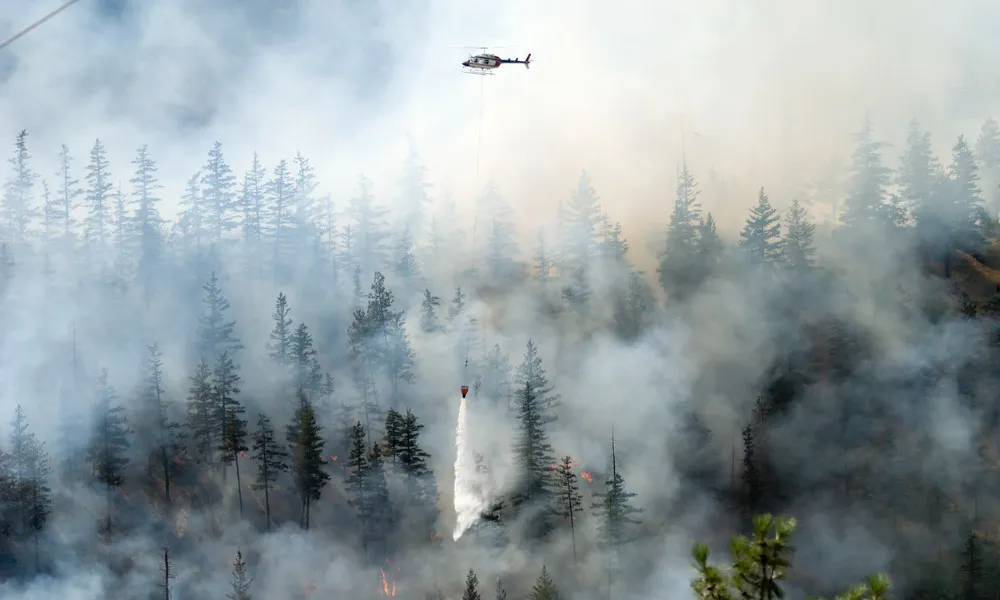
In an era marked by increasing climate volatility and catastrophic wildfires, the need for a paradigm shift in how insurance is approached has never been more pressing. Enter RockRose Risk, a burgeoning player in the wildfire insurance sector that has recently raised $12.5 million in a Series A funding round to expand its offerings. Founded in 2024, RockRose has set its sights on becoming a comprehensive solution for property owners in fire-prone areas, integrating underwriting, mitigation services, and property inspections into one streamlined process. This innovative approach promises not only to enhance the resilience of properties but also to potentially lower insurance premiums for homeowners and businesses alike.
RockRose’s pitch is straightforward: homeowners associations and hotel owners in fire country must actively harden their properties and document these efforts. By doing so, RockRose can negotiate better insurance premiums on their behalf—a strategy that has already shown promise, yielding average premium reductions of approximately 21% for commercial clients across nearly $7 billion in insured property value. This latest funding round, co-led by Crosslink Capital and Congruent Ventures, signals a significant leap forward for the company as it aims to take control of the entire mitigation process, rather than merely facilitating it through partnerships with other contractors.
The Shift from Brokerage to Comprehensive Underwriter
Historically, RockRose has operated as a specialized insurance brokerage, sending mitigation records to various carrier partners to secure better rates than traditional models based simply on geographical location. The results have been substantial, leading to a better understanding of how proactive steps can reduce risk. However, the company’s ambition is to transition from a brokerage model to holding direct control over mitigation services, particularly tree-trimming and roofing, both critical in wildfire risk reduction.
Understanding the Need for Mitigation
Wildfires have become an increasing threat across the United States, with insured wildfire losses rising at an alarming rate—around 14% per year in real terms since 1970, according to data from the Swiss Re Institute. The 2023 fire season has already surpassed 7.2 million acres burned, indicating that traditional insurance models, which often rely on broad geographic risk assessments, are inadequate. RockRose’s move to own the mitigation processes directly addresses this gap.
How RockRose Plans to Utilize Its Funding
The recent $12.5 million funding is earmarked for acquiring tree-trimming and roofing companies, allowing RockRose to directly manage the defensive measures that can significantly reduce wildfire risk. This strategy not only streamlines operations but also integrates inspection data directly into the underwriting process, creating a feedback loop that enhances risk assessment and pricing accuracy.
The Role of Technology in Risk Assessment
In addition to acquiring contractors, RockRose is leveraging technology to optimize its operations. The company has recently launched an autonomous property-inspection rover, dubbed Rosebud, to further enhance data collection on property conditions. By feeding this data directly into their underwriting submissions, RockRose can calculate premiums based on actual risk, rather than relying on outdated models that do not account for individual property resilience.

The Broader Implications of RockRose's Model
The implications of RockRose's model extend beyond individual homeowners. The company’s approach could influence the broader insurance market, particularly as wildfire risk continues to escalate. Eliza Cushman, a partner at Congruent Ventures, noted that the current market for wildfire insurance is fractured, with many carriers struggling to provide coverage at sustainable rates.
Insurance Market Disruption
As the California FAIR Plan—an insurer of last resort—continues to grapple with overwhelming demand, with a 43% increase in enrollment from September 2024 to December 2025, the need for innovative solutions becomes critical. The FAIR Plan has faced considerable financial strain, even levying a $1 billion assessment on member insurers to meet claims. This underscores the urgency for companies like RockRose, which aim to tie coverage directly to mitigation efforts that lower inherent risk.
- Direct Control: By owning contractors, RockRose can ensure quality mitigation work.
- Data-Driven Premiums: Utilizing technology for data collection allows for more accurate risk assessments.
- Market Disruption: RockRose's model could redefine wildfire insurance amidst rising costs and demand.
Challenges Ahead for RockRose
While the prospects for RockRose are promising, there are practical challenges associated with expanding into the mitigation sector. Managing construction labor and the complexities of running a contracting business can divert focus from their core competency in insurance brokerage. As the company embarks on this dual-path strategy, it must navigate these challenges carefully to ensure that its efforts do not dilute its primary mission of providing affordable and reliable wildfire insurance.
Regulatory Considerations
The regulatory landscape surrounding insurance is complex and varies significantly from state to state. RockRose will need to ensure compliance with all local regulations regarding construction and insurance practices, which can differ widely in fire-prone areas. Moreover, as climate change continues to reshape the insurance landscape, adapting to new regulations and emerging risks will be crucial for long-term success.
Key Takeaways
- RockRose Risk has raised $12.5 million to expand its wildfire insurance services.
- The company aims to integrate property mitigation efforts directly into its underwriting process.
- Wildfire losses are on the rise, necessitating innovative insurance solutions.
- By acquiring contractors, RockRose plans to streamline operations and enhance risk assessment.
- Challenges remain in balancing construction management with insurance expertise.
Frequently Asked Questions
What is RockRose Risk’s main goal?
RockRose Risk aims to transform the wildfire insurance landscape by taking direct control of property mitigation efforts. By integrating underwriting with hands-on services like tree-trimming and roofing, the company seeks to provide lower premiums and more accurate risk assessments based on actual property conditions, rather than relying solely on geographical data.
How does RockRose plan to reduce premiums for homeowners?
The company plans to reduce premiums by documenting property hardening efforts—such as installing Class-A roofs and maintaining defensible space around homes—and using this data to negotiate better rates with insurers. By controlling the mitigation process, RockRose hopes to create a more direct correlation between risk reduction efforts and insurance pricing.
Why is the wildfire insurance market facing challenges?
The wildfire insurance market faces significant challenges due to increasing losses and demand, with traditional models often failing to accurately price risk. As wildfires become more frequent and intense, insurers struggle to maintain profitability. This has led to increased premiums and limited availability of coverage, particularly in high-risk areas, making innovative solutions like those proposed by RockRose increasingly vital.
What role does technology play in RockRose’s strategy?
Technology is central to RockRose’s strategy, particularly through the use of data-driven insights for underwriting. The introduction of the Rosebud rover for property inspections allows for detailed data collection, which can directly influence premium calculations. This tech-driven approach aims to provide a more accurate assessment of wildfire risk and improve the overall efficiency of the insurance process.
Comments
LA's Uneven Fire Recovery: The $100 Million Mall Reopening and Its Implications
The reopening of Palisades Village marks a significant but uneven recovery in Pacific Palisades, illustrating the stark divide between affluent residents and those still struggling post-wildfire.

Related articles
Popular in Home Insurance
- 2026 Sees Below-Average Severe Convective Storm Losses: What It Means for Insurance
- El Niño and Wildfires: Preparing for a Fire-Prone Future
- Young Affluent Collectors: The Underinsurance Dilemma in Luxury Investments
- Wisconsin Property Owner Sues City and Insurers Over Contamination Cleanup Costs
- Rising Catastrophe Risks: How Europe’s Insurers Are Adapting to Climate Change