Florida's Insurance Litigation Landscape: A Dramatic Shift in Claims Lawsuits
Florida has dramatically reduced its share of homeowners' claims lawsuits, showcasing the impact of recent legislative reforms aimed at curbing excessive litigation. This article explores the implications of these changes for homeowners and insurers alike.
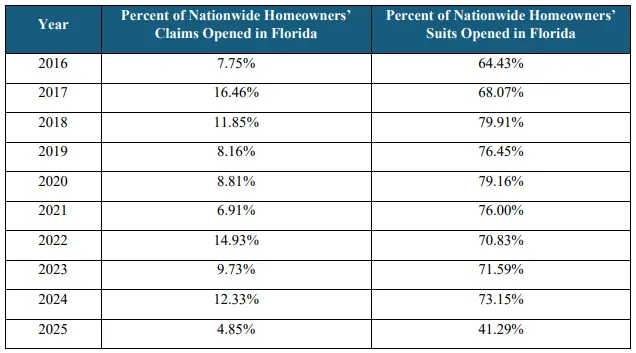
The landscape of property insurance in Florida has undergone a remarkable transformation in recent years, particularly in the realm of claims lawsuits. Once notorious for its disproportionate share of homeowners' claims litigation, Florida has seen a stunning decline in its share of such lawsuits since the implementation of critical legislative reforms. These changes have not only reshaped the legal framework surrounding insurance claims but have also provided relief to both insurers and homeowners alike.
In 2020, Florida produced approximately 9% of all homeowners' claims in the United States, but alarmingly, it accounted for over 79% of the lawsuits related to those claims. This staggering figure, highlighted in reports from the Florida Office of Insurance Regulation (OIR) and the National Association of Insurance Commissioners (NAIC), underscored the urgent need for reform in the state’s claims litigation statutes. Fast forward to 2025, and the numbers tell a much different story, indicating a significant shift in the dynamics of insurance claims and litigation in the Sunshine State.
The Context of Florida's Insurance Crisis
Before delving into the recent data, it's essential to understand the context of Florida's property insurance crisis. The early 2020s were marked by a surge in litigation, with Florida homeowners frequently resorting to lawsuits to resolve their claims. This trend was exacerbated by a unique legal framework that favored plaintiffs, including the controversial one-way attorney fee rule that allowed successful claimants to recover legal fees, often exceeding the amount of the claim itself. As a result, the system incentivized a cycle of litigation that left many insurers struggling to remain solvent.
The 2022-2023 Legislative Reforms
Recognizing the unsustainable nature of this environment, Florida lawmakers enacted several key reforms in 2022 and 2023 aimed at stabilizing the insurance market. Notably, these reforms abolished the one-way attorney fee provision and revised the assignment-of-benefits agreements that had previously allowed policyholders to transfer their claims to third parties. By eliminating these incentives for excessive litigation, the state aimed to foster a more balanced and equitable claims process.
The Shift in Claims Litigation Statistics
According to the latest Property Insurance Stability Report published by the Florida OIR, the impact of these legislative changes is evident. By the end of 2025, Florida homeowners accounted for only about 5% of claims filed nationwide, while the share of lawsuits plummeted to just 41%. This dramatic reduction marks a significant improvement from the previous years and signals a more manageable environment for insurers operating in Florida.
Key Statistics from the OIR Report:- Homeowners' claims in Florida decreased from 9% of the national total in 2020 to 5% in 2025.
- The share of lawsuits related to these claims dropped from 79% to 41%.
- Net underwriting for Florida-domiciled carriers turned from losses of approximately $1.5 billion in 2020 to gains exceeding $1.7 billion in 2025.
This turnaround represents a remarkable 180% shift in less than five years, illustrating the effectiveness of the reforms in restoring stability to Florida's insurance market.
The Implications for Homeowners and Insurers
The reduction in claims lawsuits has far-reaching implications for both homeowners and insurers in Florida. For homeowners, the legislative reforms have the potential to lower insurance premiums. As litigation costs decrease, insurers can pass these savings onto policyholders in the form of reduced rates. Some insurers have already begun to lower their rates, a promising trend for consumers who have faced skyrocketing premiums in recent years.
Moreover, a healthier insurance market, characterized by increased competition, can lead to more options for consumers. With at least 20 new carriers entering the Florida market since the reforms, homeowners now have greater choices when selecting their insurance providers, fostering a more competitive landscape.
Challenges Ahead
Despite the positive trends, challenges remain. While the reforms have made significant strides in curbing litigation, some industry experts caution that vigilance is necessary to ensure that the system does not revert to its previous state. Continued monitoring and potential adjustments to legislation may be required to sustain the current improvements.
What Homeowners Should Know
For Florida homeowners, the recent changes signify a new era of property insurance. Understanding the implications of these reforms is crucial for making informed decisions regarding insurance policies. Here are some key points to consider:
- Insurance Premiums: Homeowners may see a decrease in premiums as the market stabilizes and competition increases.
- Claims Process: The claims process may become more straightforward, with fewer lawsuits and disputes arising from claims.
- Carrier Options: With new entrants in the market, homeowners have more choices when it comes to selecting an insurance provider.
As the insurance landscape continues to evolve, homeowners should stay informed and proactive in managing their insurance needs, taking advantage of the new opportunities presented by the legislative changes.

Key Takeaways
- Florida's share of homeowners' claims lawsuits has dropped dramatically, from 79% in 2020 to 41% in 2025.
- The legislative reforms have led to a significant turnaround in net underwriting for Florida insurers.
- Homeowners can expect potential reductions in premiums and increased choices among insurance providers.

Frequently Asked Questions
What were the primary causes of Florida's insurance crisis?
The insurance crisis in Florida was primarily driven by excessive litigation stemming from a unique set of legal rules that favored plaintiffs. The one-way attorney fee rule incentivized homeowners to pursue lawsuits even for minor claims, creating a cycle of litigation that placed immense financial pressure on the insurance market. This led to a significant number of insurers exiting the market or raising premiums dramatically, further exacerbating the crisis.
How have the recent legislative reforms affected insurance premiums?
The recent legislative reforms are expected to positively impact insurance premiums by reducing the costs associated with litigation for insurers. As the volume of lawsuits declines, insurers can lower their operational expenses, allowing them to pass those savings onto consumers. Some carriers have already begun to lower rates, signaling a shift towards a more affordable insurance market for Florida homeowners.
What should homeowners do to adapt to the new insurance landscape?
Homeowners should take the opportunity to review their insurance policies and shop around for competitive rates following the reforms. With new carriers entering the market and existing insurers adjusting their rates, homeowners may find better coverage options or lower premiums. Additionally, staying informed about changes in insurance laws and market conditions will enable homeowners to make more informed decisions regarding their insurance needs.
Comments
Understanding Wildfire Risk: The Shift from Territory Models to Verified Mitigation
As homeowners face nonrenewals of their property insurance due to wildfire risks, understanding the limitations of traditional pricing models is crucial. This article explores how verified mitigation efforts can reshape insurance outcomes for homeowners and brokers alike.

Related articles




Popular in Home Insurance
- 2026 Sees Below-Average Severe Convective Storm Losses: What It Means for Insurance
- El Niño and Wildfires: Preparing for a Fire-Prone Future
- Young Affluent Collectors: The Underinsurance Dilemma in Luxury Investments
- Wisconsin Property Owner Sues City and Insurers Over Contamination Cleanup Costs
- Rising Catastrophe Risks: How Europe’s Insurers Are Adapting to Climate Change